
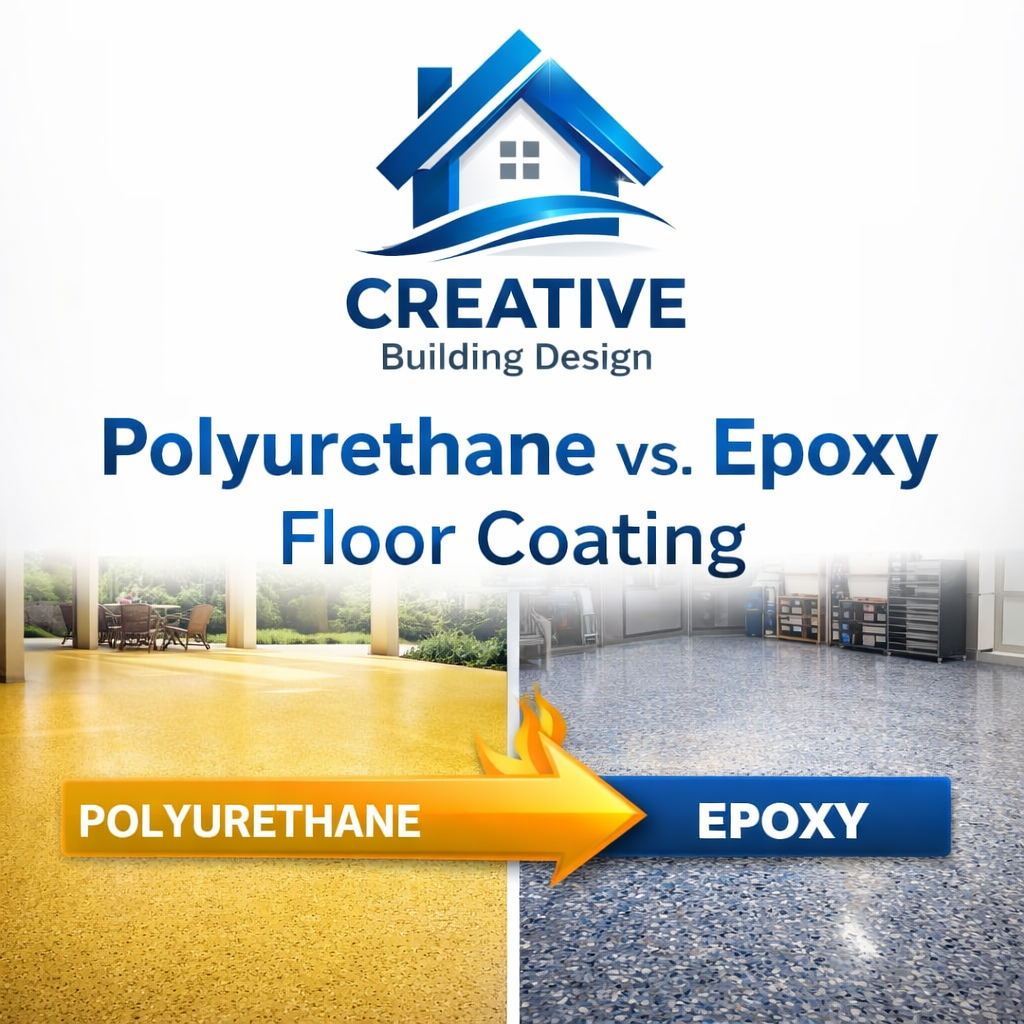
Choosing the right floor coating is a critical decision for homeowners, business owners, and industrial facility managers. Floors are exposed to constant wear and tear, chemical spills, heavy loads, and environmental conditions that can quickly degrade unprotected surfaces. Among the many flooring solutions available today, polyurethane and epoxy floor coatings stand out as two of the most reliable and widely used options.
While both coatings offer excellent durability and protection, they differ significantly in terms of flexibility, chemical resistance, UV stability, cost, and application methods. Understanding these differences is essential to selecting the right coating for your specific environment.
In this comprehensive guide, we will explore polyurethane and epoxy coatings in depth, compare their performance, advantages, disadvantages, and applications, and help you make an informed decision.
What is Polyurethane Floor Coating?
Polyurethane floor coating is a type of polymer-based protective layer formed through chemical reactions involving isocyanates and polyols. This reaction creates a flexible yet highly durable material known for its resistance to abrasion, chemicals, and environmental stress.
Unlike rigid coatings, polyurethane maintains elasticity even after curing. This flexibility allows it to absorb impacts and adapt to substrate movement, making it especially useful in dynamic environments.
Key Characteristics of Polyurethane
Polyurethane coatings are widely valued for the following properties:
1. Exceptional Flexibility
One of the most significant advantages of polyurethane is its flexibility. Unlike rigid coatings, it can expand and contract with temperature changes and structural movement without cracking.
2. High Abrasion Resistance
Polyurethane is highly resistant to scratches, scuffs, and wear, making it ideal for areas with constant foot traffic or machinery movement.
3. UV Stability
Polyurethane coatings are resistant to ultraviolet rays, which means they do not yellow, fade, or degrade when exposed to sunlight. This makes them perfect for outdoor applications.
4. Chemical Resistance
Polyurethane resists a wide range of chemicals, including oils, solvents, and cleaning agents. This makes it suitable for industrial environments.
5. Smooth Finish
It provides a sleek, glossy, or matte finish that enhances the visual appeal of floors.
Common Applications of Polyurethane Coatings
Polyurethane coatings are used in a variety of environments, including:
- Outdoor patios and walkways
- Parking decks and driveways
- Warehouses and logistics centers
- Shopping malls and commercial spaces
- Sports courts and recreational facilities
- Industrial plants exposed to chemicals
What is Epoxy Floor Coating?
Epoxy floor coating is a thermosetting resin system created by mixing epoxy resin with a hardener. When combined, these components chemically react to form a rigid plastic material that bonds tightly to concrete surfaces.
Epoxy is known for creating a hard, seamless, and highly durable surface that can withstand heavy loads and harsh environments.
Key Characteristics of Epoxy
1. Superior Hardness
Epoxy creates a rigid, strong surface capable of handling heavy machinery, vehicles, and equipment.
2. Strong Adhesion
It bonds extremely well with concrete, forming a seamless and long-lasting coating.
3. Chemical Resistance
Epoxy resists oil, fuel, grease, and many industrial chemicals, making it ideal for demanding environments.
4. Decorative Options
Epoxy flooring offers unmatched customization options, including:
- Metallic finishes
- Flake systems
- Quartz systems
- Custom colors and patterns
5. Seamless Surface
Epoxy eliminates joints and cracks, making floors easier to clean and maintain.
Common Applications of Epoxy Coatings
Epoxy flooring is widely used in:
- Residential garages
- Commercial kitchens
- Hospitals and laboratories
- Manufacturing facilities
- Showrooms and retail stores
- Food processing plants
Polyurethane vs. Epoxy: Detailed Comparison
Now let’s compare these two coatings across key performance factors.
1. Durability and Strength
Epoxy:
Epoxy is extremely hard and durable. It can handle heavy loads, making it ideal for industrial environments with forklifts, trucks, and machinery.
Polyurethane:
Polyurethane is also durable but focuses more on flexibility. It absorbs impacts better and resists surface damage from vibrations and movement.
Winner:
- Heavy load environments → Epoxy
- Impact resistance → Polyurethane
2. Flexibility
Polyurethane:
Highly flexible and elastic. It resists cracking even when the substrate expands or contracts.
Epoxy:
Rigid and brittle compared to polyurethane. It may crack under structural movement or sudden impact.
Winner: Polyurethane
3. UV Resistance
Polyurethane:
Excellent UV resistance. It maintains color and clarity even in direct sunlight.
Epoxy:
Poor UV resistance. It tends to yellow and degrade when exposed to sunlight over time.
Winner: Polyurethane
4. Chemical Resistance
Both coatings offer strong chemical resistance, but there are slight differences:
Polyurethane:
Better resistance to a broader range of chemicals, especially organic acids and solvents.
Epoxy:
Highly resistant to oils, fuels, and many industrial chemicals.
Winner: Slight edge to Polyurethane
5. Application Process
Epoxy:
- Requires careful surface preparation
- Longer curing time (24–72 hours or more)
- Sensitive to moisture during application
Polyurethane:
- Faster curing time
- More sensitive to humidity during installation
- Often used as a topcoat over epoxy
Winner: Polyurethane (for faster turnaround)
6. Aesthetic Options
Epoxy:
- Highly customizable
- Wide range of colors and designs
- Metallic and decorative finishes
Polyurethane:
- Limited decorative options
- Usually used for protective topcoats
Winner: Epoxy
7. Cost Comparison
Epoxy:
Generally more affordable, especially for large areas.
Polyurethane:
More expensive due to advanced properties and complex application.
Winner: Epoxy
8. Maintenance
Both coatings are low-maintenance, but:
- Epoxy surfaces may show scratches more easily
- Polyurethane is more resistant to wear over time
Advantages and Disadvantages Summary
Polyurethane Pros
- Flexible and impact-resistant
- UV stable (no yellowing)
- Excellent abrasion resistance
- Chemical resistant
Polyurethane Cons
- Higher cost
- Limited decorative options
- Sensitive application conditions
Epoxy Pros
- Extremely strong and durable
- Affordable
- Decorative flexibility
- Strong adhesion
Epoxy Cons
- Prone to UV damage
- Less flexible
- Longer curing time
Can You Use Both Together?
Yes—and in fact, this is one of the best approaches.
Many professional flooring systems use:
- Epoxy as a base coat for strength and adhesion
- Polyurethane as a topcoat for UV protection and flexibility
This combination provides the best of both worlds:
- Strength
- Durability
- Aesthetic appeal
- Long-term protection
Which One Should You Choose?
Your choice depends on your specific use case:
Choose Polyurethane if:
- Your floor is exposed to sunlight
- You need flexibility and impact resistance
- The area experiences temperature changes
- You want long-term durability in outdoor environments
Choose Epoxy if:
- You need a strong, rigid surface
- Your space is indoors
- You want decorative finishes
- Budget is a concern
Frequently Asked Questions (FAQs)
Which coating lasts longer, epoxy or polyurethane?
When comparing the longevity of epoxy and polyurethane floor coatings, both materials are known for their durability, but their performance differs depending on environmental conditions and usage. Epoxy coatings are incredibly strong and form a rigid, hard surface that bonds tightly to concrete. In indoor environments with stable temperatures—such as warehouses, factories, and garages—epoxy flooring can last anywhere from 10 to 20 years or even longer with proper maintenance.
However, polyurethane coatings often outperform epoxy in environments where flexibility and resistance to environmental stress are important. Polyurethane is more elastic, allowing it to expand and contract with temperature changes. This flexibility makes it less prone to cracking in areas exposed to thermal fluctuations. Additionally, polyurethane has superior resistance to ultraviolet (UV) rays, which prevents yellowing and degradation over time—something epoxy struggles with.
In outdoor settings or areas exposed to sunlight, moisture, and temperature swings, polyurethane typically lasts longer than epoxy. It also performs better in environments with heavy foot traffic or frequent impacts because it can absorb shocks more effectively without chipping or cracking.
That said, the lifespan of either coating depends heavily on factors such as surface preparation, installation quality, traffic load, chemical exposure, and maintenance practices. A poorly installed polyurethane floor may fail faster than a properly installed epoxy system, and vice versa.
In many real-world applications, the best solution is a combination system—using epoxy as a base coat for strength and adhesion, and polyurethane as a topcoat for protection and flexibility. This hybrid approach maximizes durability and extends the overall lifespan of the flooring system.
Is polyurethane better than epoxy?
The question of whether polyurethane is better than epoxy does not have a one-size-fits-all answer. Both coatings have unique properties that make them suitable for different applications, and the “better” option depends entirely on your specific needs.
Epoxy is widely known for its exceptional strength, hardness, and adhesion. It creates a thick, durable surface that can withstand heavy loads, making it ideal for industrial environments, garages, and areas with high mechanical stress. Epoxy is also highly customizable, offering a wide range of colors, patterns, and decorative finishes, which makes it popular for both residential and commercial spaces.
On the other hand, polyurethane excels in flexibility and resistance to environmental factors. Unlike epoxy, it can expand and contract with temperature changes without cracking. This makes polyurethane a better choice for areas exposed to sunlight, outdoor conditions, or fluctuating temperatures. It also has superior resistance to UV rays, meaning it won’t yellow or fade over time.
Another advantage of polyurethane is its resistance to abrasion and chemicals. It performs well in environments where floors are exposed to oils, solvents, and frequent cleaning. Additionally, polyurethane coatings tend to have a more slip-resistant finish, improving safety in wet or high-traffic areas.
However, polyurethane is generally more expensive and requires more precise application conditions, which can make installation more challenging. Epoxy, while slightly less flexible, is often more cost-effective and easier to install.
In many cases, professionals use both materials together—epoxy as a base layer for strength and polyurethane as a topcoat for protection. This combination leverages the strengths of both systems, providing a balanced and high-performance flooring solution.
Can epoxy be used outdoors?
Epoxy can be used outdoors, but it is not always the ideal choice unless additional protective measures are taken. One of the main limitations of epoxy is its sensitivity to ultraviolet (UV) radiation. When exposed to direct sunlight over time, epoxy coatings tend to yellow, fade, and lose their original appearance. This does not necessarily mean the coating fails structurally, but it can significantly affect aesthetics and long-term performance.
In addition to UV degradation, outdoor environments often involve temperature fluctuations, moisture, and weather exposure. Epoxy is a rigid material, which means it does not expand and contract easily with changing temperatures. This lack of flexibility can lead to cracking or delamination over time, especially in climates with extreme heat or cold.
To successfully use epoxy outdoors, it is highly recommended to apply a protective topcoat—typically polyurethane or polyaspartic. These topcoats provide UV resistance, enhanced flexibility, and additional protection against environmental factors. With the right topcoat, an epoxy system can perform well in outdoor settings such as patios, driveways, and walkways.
Surface preparation is also critical for outdoor epoxy applications. The concrete must be clean, dry, and properly primed to ensure strong adhesion. Moisture issues, such as rising damp from the ground, can compromise the coating if not addressed beforehand.
While epoxy can be part of an outdoor flooring system, polyurethane is often the preferred choice for the top layer due to its superior UV stability and flexibility. In many cases, a combination system—epoxy base with a polyurethane topcoat—provides the best balance of durability, appearance, and longevity for outdoor use.
Is epoxy flooring slippery?
Epoxy flooring can indeed be slippery, especially when it is wet or when oil, grease, or other liquids are present on the surface. This is because epoxy creates a smooth, glossy finish that reduces friction. In environments such as garages, kitchens, warehouses, or commercial spaces, this can pose a safety risk if not properly addressed.
However, the good news is that epoxy flooring can be easily modified to improve slip resistance. During installation, anti-slip additives can be mixed into the epoxy or broadcast onto the surface. These additives may include materials like silica sand, aluminum oxide, or polymer grit, which create a textured finish and increase traction.
The level of slip resistance can be customized depending on the application. For example, residential floors may require only a mild texture for comfort and aesthetics, while industrial environments may need a more aggressive anti-slip surface to meet safety standards. It’s important to strike a balance, as too much texture can make the floor difficult to clean.
Another factor to consider is maintenance. Even a slip-resistant epoxy floor can become hazardous if it is not cleaned regularly. Accumulated dirt, oil, or water can reduce traction over time. Proper cleaning and routine inspections help maintain safety and performance.
In addition, matte or satin finishes tend to be less slippery than high-gloss finishes. Choosing the right finish can also contribute to a safer flooring system.
Overall, while epoxy flooring has the potential to be slippery, it is not inherently unsafe. With the right additives, proper installation, and regular maintenance, epoxy floors can be made highly slip-resistant and suitable for a wide range of environments.
How long does epoxy flooring last?
Epoxy flooring is known for its durability and long service life, making it a popular choice for both residential and commercial applications. When properly installed and maintained, epoxy flooring can last between 10 and 20 years, and in some cases even longer.
The lifespan of epoxy flooring depends on several factors, including the quality of the materials used, the condition of the substrate, and the level of traffic the floor experiences. In residential settings such as garages or basements, epoxy floors often last closer to the upper end of the range due to lighter use. In contrast, industrial environments with heavy machinery, chemical exposure, and constant foot traffic may see a shorter lifespan.
Surface preparation is one of the most critical factors in determining longevity. Proper cleaning, grinding, and priming of the concrete ensure strong adhesion and prevent issues such as peeling or delamination. Poor preparation can significantly reduce the lifespan of the coating.
Maintenance also plays a key role. Regular cleaning, avoiding harsh chemicals, and addressing minor damages promptly can extend the life of the floor. Protective measures, such as using mats in high-traffic areas, can also help reduce wear and tear.
Environmental conditions are another consideration. Epoxy performs best in indoor environments with stable temperatures. Exposure to UV light, moisture, and temperature fluctuations can accelerate degradation unless a protective topcoat is applied.
In many cases, epoxy flooring systems are enhanced with additional layers, such as polyurethane topcoats, to improve durability and extend lifespan. With the right combination of materials and proper care, epoxy flooring can provide a long-lasting, cost-effective solution for a wide range of applications.
How long does polyurethane flooring last?
Polyurethane flooring is highly regarded for its longevity, particularly in environments where flexibility and resistance to environmental factors are important. On average, polyurethane coatings can last between 15 and 25 years, making them a long-term investment for both residential and commercial spaces.
One of the key reasons for polyurethane’s extended lifespan is its flexibility. Unlike epoxy, polyurethane can expand and contract with temperature changes, reducing the risk of cracking. This makes it especially suitable for areas exposed to sunlight, outdoor conditions, or fluctuating temperatures.
Polyurethane also has excellent resistance to UV radiation, which prevents yellowing and degradation over time. This is a significant advantage in spaces with large windows or outdoor exposure. Additionally, it offers strong resistance to abrasion, chemicals, and moisture, making it ideal for high-traffic areas and industrial environments.
The durability of polyurethane flooring also depends on proper installation and maintenance. Surface preparation is crucial to ensure good adhesion, and professional installation is often recommended due to the material’s sensitivity to application conditions. Once installed, regular cleaning and maintenance can help preserve its appearance and performance.
In many cases, polyurethane is used as a topcoat over epoxy to enhance durability and extend the life of the entire flooring system. This combination provides both strength and flexibility, resulting in a more resilient surface.
Overall, polyurethane flooring offers excellent longevity and performance, particularly in challenging environments. While it may have a higher upfront cost, its long lifespan and low maintenance requirements often make it a cost-effective choice in the long run.
Which is more expensive?
When comparing costs, polyurethane flooring is generally more expensive than epoxy. The higher price is due to several factors, including material costs, installation complexity, and performance characteristics.
Polyurethane coatings are typically more advanced in terms of chemical composition, offering superior flexibility, UV resistance, and durability. These enhanced properties come at a higher material cost. Additionally, polyurethane often requires more precise application conditions, such as controlled temperature and humidity, which can increase labor costs.
Epoxy, on the other hand, is more widely used and generally more affordable. It provides excellent strength and durability at a lower cost, making it a popular choice for garages, warehouses, and residential applications. The installation process for epoxy is also relatively straightforward, which can help reduce overall expenses.
However, it’s important to consider long-term value rather than just upfront cost. While polyurethane may be more expensive initially, its longer lifespan and lower maintenance requirements can make it more cost-effective over time. In environments with high UV exposure or temperature fluctuations, polyurethane may require fewer repairs and replacements.
In many cases, a combination system is used—epoxy as a base coat and polyurethane as a topcoat. This approach balances cost and performance, providing a durable and long-lasting flooring solution without the full expense of a polyurethane-only system.
Ultimately, the choice between epoxy and polyurethane should be based on your specific needs, budget, and environmental conditions. Consulting with a professional can help you determine the most cost-effective solution for your project.
Can I apply these coatings myself?
Applying epoxy or polyurethane floor coatings yourself is possible, but it comes with challenges that should not be underestimated. While many DIY kits are available on the market, achieving professional-quality results requires careful preparation, proper tools, and a good understanding of the materials.
One of the most critical steps in the process is surface preparation. The concrete must be thoroughly cleaned, repaired, and often mechanically ground to ensure proper adhesion. Skipping or inadequately performing this step can lead to issues such as peeling, bubbling, or uneven coverage.
Epoxy is generally more forgiving for DIY applications compared to polyurethane. It has a longer working time, allowing beginners to apply it more easily. However, timing is still crucial, as epoxy must be mixed and applied within a specific window.
Polyurethane, on the other hand, is more sensitive to environmental conditions such as temperature and humidity. It also has a shorter working time, making it more challenging to apply correctly. Mistakes during application can result in visible defects or reduced performance.
Safety is another consideration. Both epoxy and polyurethane involve chemicals that require proper ventilation and protective equipment during application.
While DIY application can save money upfront, it may lead to costly repairs if not done correctly. Professional installers have the experience, equipment, and expertise to ensure a high-quality finish and long-lasting performance.
For small, low-traffic areas, DIY may be a viable option. However, for larger spaces or critical applications, professional installation is strongly recommended to achieve the best results.
Which coating is better for garages?
For garage flooring, epoxy is typically considered the better choice due to its strength, durability, and cost-effectiveness. Garages often experience heavy loads from vehicles, exposure to oil and chemicals, and frequent use, all of which require a robust flooring solution.
Epoxy forms a hard, impact-resistant surface that can withstand the weight of cars and resist damage from dropped tools or equipment. It also provides excellent chemical resistance, protecting the concrete from oil spills, gasoline, and other automotive fluids.
Another advantage of epoxy is its affordability. Compared to polyurethane, epoxy offers a strong and durable finish at a lower cost, making it an attractive option for homeowners.
Epoxy flooring is also highly customizable, allowing for decorative finishes such as color flakes or metallic effects. This can enhance the appearance of the garage while maintaining functionality.
However, epoxy does have some limitations. It can become slippery when wet, but this can be addressed with anti-slip additives. It is also sensitive to UV light, so garages with significant sunlight exposure may require a protective topcoat.
In some cases, a combination system is used—epoxy as the base coat and polyurethane as the topcoat. This provides the strength of epoxy along with the flexibility and UV resistance of polyurethane.
Overall, epoxy is the preferred choice for most garage applications due to its balance of performance, cost, and ease of installation.
Why use polyurethane over epoxy?
Polyurethane is often used as a topcoat to protect epoxy from UV damage and add flexibility.
Final Words:
Both polyurethane and epoxy floor coatings are excellent solutions, but they serve different purposes. Epoxy is best for strength and aesthetics, while polyurethane excels in flexibility and UV resistance.For optimal results, many experts recommend combining both systems to maximize performance and longevity.