
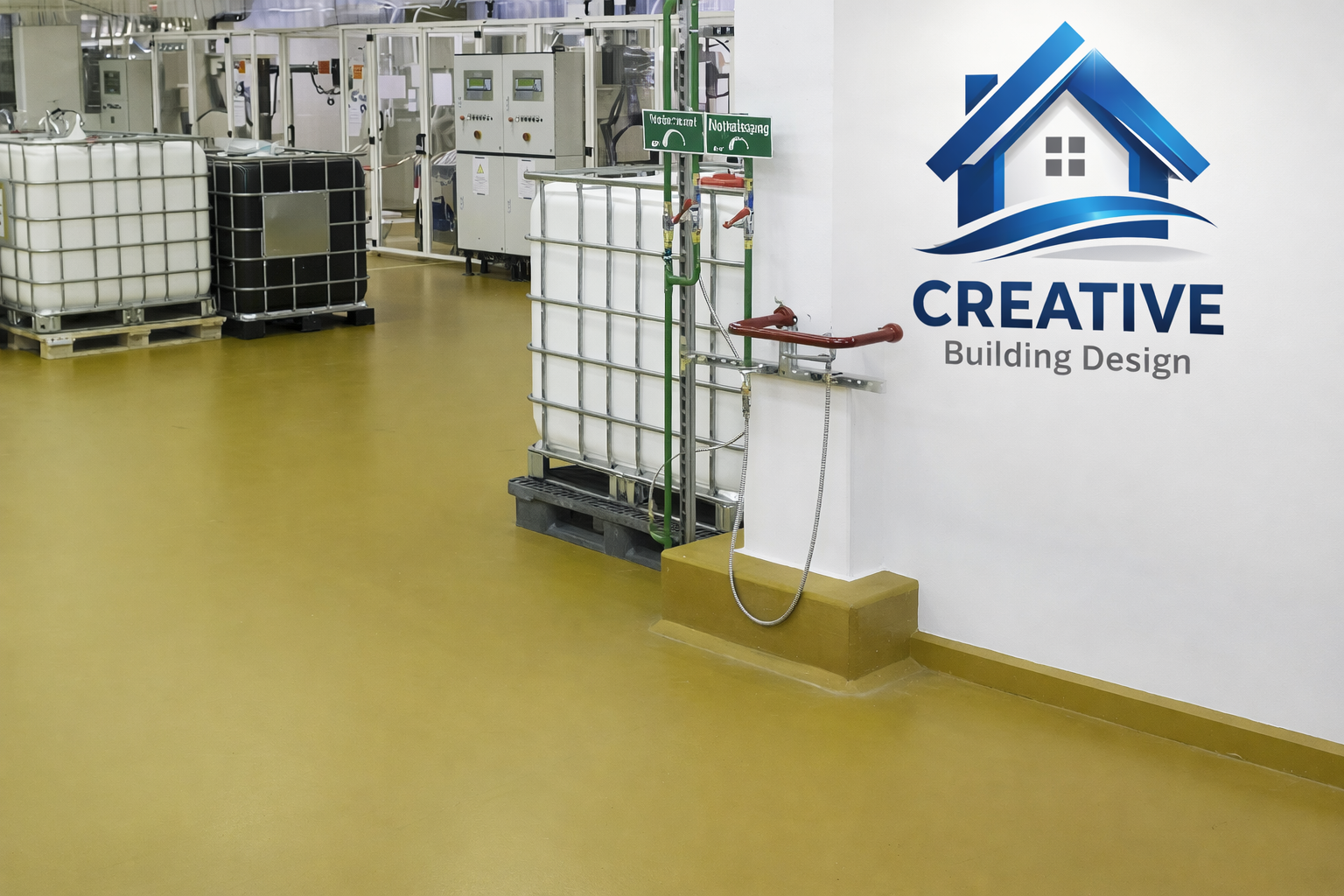
In the rapidly expanding industrial and residential landscape of Bangladesh, the choice of flooring has transitioned from a basic structural necessity to a critical performance decision. As manufacturing sectors like garments, textiles, and pharmaceuticals experience exponential growth, traditional concrete and mosaic floors are increasingly proving inadequate for heavy-duty environments.
What Is Epoxy Flooring?
Epoxy flooring is a heavy-duty, synthetic surface coating applied over concrete substrates. It is created by mixing two distinct components: a liquid polymer resin and a hardener.
When these two liquids are mixed, they trigger a chemical reaction that creates a rigid plastic material that bonds cross-linked polymers directly to the concrete.
Enter epoxy floor paint. Once a niche chemical application restricted to specialized labs, epoxy resin technology has emerged as a premier flooring standard across major industrial zones like Gazipur, Narayanganj, Chittagong, and Savar. This article explores the core dynamics of the epoxy floor paint market in Bangladesh—focusing on its variants, technical applications, durability metrics, and the underlying variables that determine procurement economics without wading into specific numeric figures.
1. Understanding Epoxy Floor Paint Technology
To understand how procurement costs are structured, one must first understand what epoxy floor paint actually is. Unlike standard acrylic or latex paints that dry via solvent evaporation, true industrial epoxy is a two-part chemical system consisting of:
-
A Base Resin: Typically an epichlorohydrin and bisphenol-A compound.
-
A Hardener (Curing Agent): Usually polyamines or amidoamines.
When mixed, these components trigger an exothermic chemical reaction (a cross-linking polymerization process) that transforms the liquid mixture into a rigid, plastic-like structural matrix. The result is not merely a superficial layer of color on top of concrete, but a permanent, seamless bond fused directly into the concrete pores. This dense cross-linking is what gives the material its signature resistance against intense mechanical stress, heavy foot traffic, and aggressive chemical exposure.
2. Key Epoxy Flooring Systems Available in Bangladesh
The financial blueprint of any industrial or commercial flooring project in Dhaka or Chittagong is heavily shaped by the specific type of epoxy system chosen. Different structural requirements necessitate different formulations:
Thin-Film Epoxy Coatings
This system involves applying a primer and one or two coats of thin-build epoxy paint. It is best suited for light-duty commercial environments, foot traffic pathways, and small retail spaces where dust control and aesthetic uniformity are the main priorities rather than high-impact forklift traffic. Because it requires less raw material, its economic tier remains highly accessible for small-to-medium enterprises (SMEs).
Self-Leveling Epoxy (SLE) Flooring
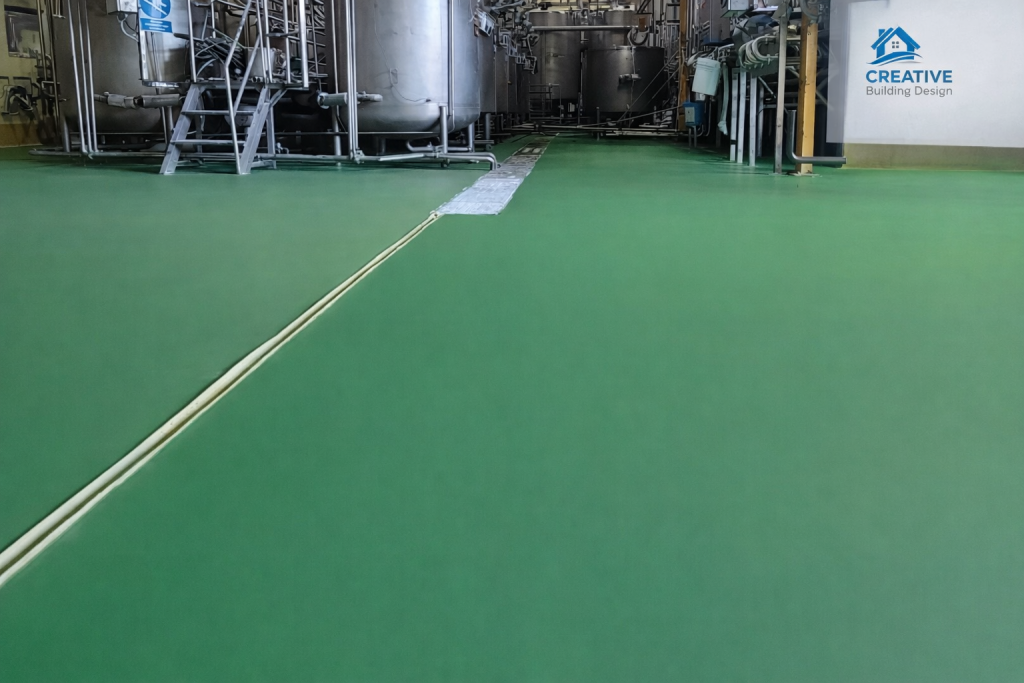
Widely favored in Bangladesh’s pharmaceutical cleanrooms and electronics manufacturing plants, self-leveling epoxy flows smoothly across a concrete substrate to form a completely flat, seamless surface. It effectively fills out small pits and cracks without manual troweling. SLE systems are applied at greater thicknesses, creating a heavy-duty shield capable of handling heavy machinery, moving carts, and frequent sanitization cycles.
High-Build and Mortar Systems
Designed for the absolute heaviest industrial stress, mortar and high-build systems incorporate quartz sand or aggregate fillers into the resin mix. These are deployed in environments like garment factory cutting rooms, shipping bays, and chemical processing zones where the floor faces continuous impact, massive weight loads, and mechanical vibrations.
3. The Industrial Drivers Behind Epoxy’s Surge
Why are Bangladeshi business owners moving away from traditional floor tiles or raw concrete finishes? The shift is driven by compliance, safety, and operational longevity.
-
International Compliance Standards: For export-oriented industries—particularly the Readymade Garments (RMG) sector and pharmaceutical manufacturers seeking FDA or EU compliance—non-porous, dust-free floors are mandatory. Standard concrete sheds microscopic dust over time, which can ruin delicate textiles or contaminate sterile pharmaceutical batches.
-
Chemical Resistance: Factories dealing with dyes, washing chemicals, oils, and solvents need a floor that will not corrode upon contact. Epoxy is highly non-reactive, protecting the underlying concrete structure from deep-set chemical degradation.
-
Moisture Resilience Adaptation: Prominent domestic manufacturers have specifically formulated modern epoxy products to withstand Bangladesh’s distinct subtropical climate, accounting for high ambient humidity levels and seasonal monsoon fluctuations during the curing stage.
4. What Determines the Total Project Economics?
When a company or property owner requests a project proposal from a specialized construction chemical applicator in Bangladesh, the final valuation is computed based on several dynamic factors. Understanding these elements helps project managers gauge real-world expenses far better than looking at flat product lists:
Structural Substrate Condition
The readiness of the existing concrete floor is the single largest variable. If a concrete slab is uneven, cracked, contaminated with old engine oil, or lacks a proper moisture barrier underneath, it requires intensive mechanical preparation. This can involve diamond-disc grinding, shot-blasting, and the application of specialized moisture-mitigating primers. Extensive preparatory work directly multiplies labor and material inputs before the actual colored topcoat ever touches the ground.
Intended Mil Thickness
Epoxy flooring is specified by thickness rather than just the number of painted layers. A simple light coating might be measured in microns, whereas a self-leveling or aggregate-reinforced industrial floor is measured in millimeters. Naturally, thicker systems consume significantly more kilograms of resin per square foot, driving up the overall material acquisition costs.
Area and Scale of the Project
In industrial contracting, economies of scale play a massive role. Mobilizing specialized equipment (like heavy-duty industrial floor grinders, dust extractors, and mixing units) and transporting a skilled application crew to a site involves fixed overhead costs. Consequently, larger industrial installations spanning tens of thousands of square feet achieve a highly optimized cost-per-unit ratio compared to a tight, localized commercial showroom.
5. Seamless Maintenance and Long-Term Value
While the initial installation of an epoxy system involves a higher capital investment compared to standard commercial floor paint or basic tiling, its long-term cost of ownership is remarkably low.
Because epoxy creates a continuous, poreless sheet across a room, there are no grout lines or crevices where dirt, grease, and bacteria can accumulate. Cleaning a facility requires nothing more than a standard mop, water, and mild detergent, eliminating the need for expensive chemical floor strippers or continuous waxing. Under normal industrial operational parameters, a professionally applied high-build epoxy floor can easily endure up to two decades without requiring full replacement, delivering a highly favorable return on investment (ROI) for factory assets.
Factors Influencing Epoxy Floor Paint Price in Bangladesh:
In Bangladesh, the cost of epoxy floor coatings ranges widely, typically between BDT 150 to BDT 450+ per square foot (including materials and application labor).
Because most raw chemical polymers and resins are imported into Bangladesh, local prices are highly sensitive to market fluctuations. If you are calculating a budget for a factory, garment plant, showroom, or residential space, several major factors determine the final price quotation.
1. Type of Epoxy Formulation
The chemical composition of the epoxy system dictates the base material cost:
-
Water-Based Epoxy (BDT 100 – BDT 150 / sq. ft.): The cheapest option. It is thinner and easy to apply but lacks the durability needed for heavy wear. Mainly used in light-traffic residential or office spaces.
-
Standard / High-Build Epoxy Coating (BDT 150 – BDT 250 / sq. ft.): The most common choice for commercial showrooms and medium-duty areas.
-
100% Solid Industrial Epoxy (BDT 250 – BDT 350 / sq. ft.): Solvent-free and incredibly thick. It forms an indestructible bond ideal for heavy vehicle traffic and heavy machinery.
-
Self-Leveling Epoxy Flooring (BDT 400 – BDT 1,000 / sq. ft.): Highly specialized. It creates a completely flawless, seamless, and level finish. It is expensive but mandatory for pharmaceutical plants and modern hospital OT rooms.
-
Decorative, Metallic, or 3D Epoxy (BDT 450+ / sq. ft.): Combines custom imported visuals, clear topcoats, and skilled artistic labor.
2. Thickness of the Coating (in mm or Microns)
Epoxy is rarely priced strictly by the container; it is priced by the volume needed to hit a specified depth.
-
A thin 0.5 mm to 1 mm layer protects against light dust and minor spills (common in small retail shops).
-
Heavy-duty manufacturing or apparel factories usually require 2 mm to 4 mm of thickness to withstand forklifts and constant friction.
Every additional millimeter of thickness directly multiplies the volume of resin required, significantly increasing the cost per square foot.
3. Existing Concrete Floor Condition
If a contractor lays epoxy on a cracked, uneven, or oil-soaked concrete slab, it will peel off rapidly.
-
New, smooth concrete floors require minimal prep work (standard diamond grinding or light etching), keeping labor costs low.
-
Old, damaged industrial floors with deep oil stains, cracks, or pitting require extensive concrete repairs, deep chemical degreasing, and leveling mortars before the actual epoxy can be applied. This extra prep work can add heavily to the project bill.
4. Origin and Brand of Materials
Since Bangladesh relies primarily on imported construction chemicals, the manufacturer brand heavily influences the rate:
-
Premium Imported Brands: European or American brands (like BASF, Sika, or specialized UK imports) offer top-tier chemical resistance but carry premium pricing due to import duties and freight.
-
Regional Brands: Materials sourced from manufacturers in India, China, or blended by prominent local entities (such as Ducon Chemical or specialized local applicators) offer highly competitive, budget-friendly pricing.
5. Project Area Size (Scale of Economy)
Because mobilization, machinery transport, and surface prep tools carry a high fixed cost, the total square footage heavily affects the unit price.
-
A small garage or residential room (under 1,000 sq. ft.) will face a higher price per square foot because the fixed overhead is spread over a small area.
-
Large-scale commercial projects or garment factories (above 10,000 sq. ft.) usually receive steep volume discounts from local application teams.
Cost Breakdown Summary
| Epoxy System Type | Typical Bangladesh Price Range | Primary Use Case |
| Water-Based | BDT 100 – BDT 150 / sq. ft. | Residential rooms, light storage balconies |
| Standard Coating | BDT 150 – BDT 250 / sq. ft. | Showrooms, office spaces, light workshops |
| 100% Solid Industrial | BDT 250 – BDT 350 / sq. ft. | Garments, factories, parking structures |
| 3D / Decorative Metallic | BDT 450+ / sq. ft. | Premium restaurants, home interiors, luxury retail |
| Self-Leveling | BDT 500 – BDT 1,000 / sq. ft. | Pharmaceuticals, hospital labs, cleanrooms |
Average Cost of Epoxy Floor Paint in Bangladesh:
This pricing includes both the required chemical materials and professional application labor. Because most raw chemical resins are imported into Bangladesh, actual project estimates scale based on the specific type of epoxy material used, floor thickness, and overall square footage.
Average Price Breakdown by Flooring Type
| Epoxy System Type | Average Price Range (per sq. ft.) | Primary Target Areas in Bangladesh |
| Water-Based Epoxy | BDT 100 – BDT 150 | Residential areas, balconies, low-traffic store rooms |
| Standard Epoxy Coating | BDT 120 – BDT 250 | Showrooms, corporate offices, commercial shops |
| High-Build / 100% Solid | BDT 120 – BDT 350 | Garment factories, automotive garages, heavy warehouses |
| 3D / Decorative Metallic | BDT 450 – BDT 600+ | Luxury home interiors, themed restaurants, upscale retail |
| Self-Leveling Epoxy | BDT 450 – BDT 1,000 | Pharmaceutical plants, cleanrooms, hospital operation theaters |
Why Epoxy Flooring Is Popular in Bangladesh?
The country’s rapid economic expansion, coupled with specific environmental demands, has made traditional tiling or bare concrete less practical for modern infrastructure.
Several key factors explain why epoxy flooring has become so popular in Bangladesh:
1. Boom in the Industrial & Garment Sectors
Bangladesh is a global hub for textile manufacturing, readymade garments (RMG), and pharmaceuticals. These industries operate high-traffic factories and warehouses utilizing heavy machinery, forklifts, and constant foot traffic. Standard concrete floors wear down and generate dust, which can damage sensitive machinery or ruin fabric. Epoxy provides a heavy-duty, seamless surface that can take a beating without cracking or peeling.
2. Strict Hygiene and Health Compliance
For Bangladesh’s fast-growing pharmaceutical and food & beverage industries, hygiene is non-negotiable to meet global export standards.
-
Seamless design: Unlike tiles, epoxy flooring has no grout lines or joints where bacteria, mold, or dirt can accumulate.
-
Non-porous barrier: It creates an impermeable surface that resists chemical spills, oils, and acids, making it incredibly easy to sanitize with standard cleaning agents.
3. Climate Resilience and Moisture Protection
Bangladesh experiences heavy monsoon seasons and high humidity levels, which often lead to dampness seeping through concrete foundations. Epoxy acts as a liquid damp-proof membrane (DPM). It seals the underlying concrete, protecting spaces from moisture damage, preventing water degradation, and offering specialized anti-slip finishes that keep workers safe on wet floors.
4. Cost-Effectiveness and Longevity
While the initial setup requires an investment, epoxy is highly cost-effective in the long run. In Bangladesh, prices typically range from BDT 150 to BDT 600 per square foot, depending on thickness and quality. Because a properly installed epoxy floor can last 10 to 20 years with minimal upkeep, businesses save significantly on the frequent repairs or replacements associated with traditional flooring.
5. Aesthetic Versatility
Beyond its practical strengths, epoxy has gained traction in Bangladeshi showrooms, modern offices, corporate buildings, and residential garages due to its sleek appearance. It delivers a high-gloss finish that reflects light—making interior spaces look brighter and more spacious—and allows for complete customization with different colors, metallic finishes, and even embedded company logos.
Key Industries Driving Adoption in Bangladesh
| Industry | Primary Benefit Needed | Why Epoxy Wins |
| Garments & Textiles | Dust control & heavy load capacity | Prevents concrete dust from ruining fabrics; withstands heavy machinery. |
| Pharmaceuticals | Sterile, contaminant-free environment | Seamless, antimicrobial, and chemically resistant to harsh cleanings. |
| Commercial Showrooms | Visual appeal & light reflectivity | High-gloss finish transforms dull spaces and highlights products. |
| Underground Parking | Resistance to oil, tires, and water | Protects concrete from vehicle fluid leaks and withstands high tire friction. |
Conclusion
Selecting epoxy floor paint in Bangladesh is a strategic balance between engineering requirements and project economics. Rather than treating flooring as a simple color preference, savvy local enterprises view it as a foundational shield that protects concrete infrastructure, ensures global regulatory compliance, and minimizes long-term maintenance costs. By assessing surface conditions, evaluating thickness needs, and collaborating with established technical applicators, businesses can seamlessly upgrade their environments to world-class standards.